
We often talk about climate change as a problem of the planet. Rising temperatures. Melting ice. Extreme weather. All of that is true. But it is not the full picture. Because climate change is not just about what is happening to the Earth. Climate change is about what is happening to people. And more importantly, who it is happening to the most.
Why Climate Change Is Really About Fairness
We often describe climate change in scientific terms. But the reality is deeply unequal.
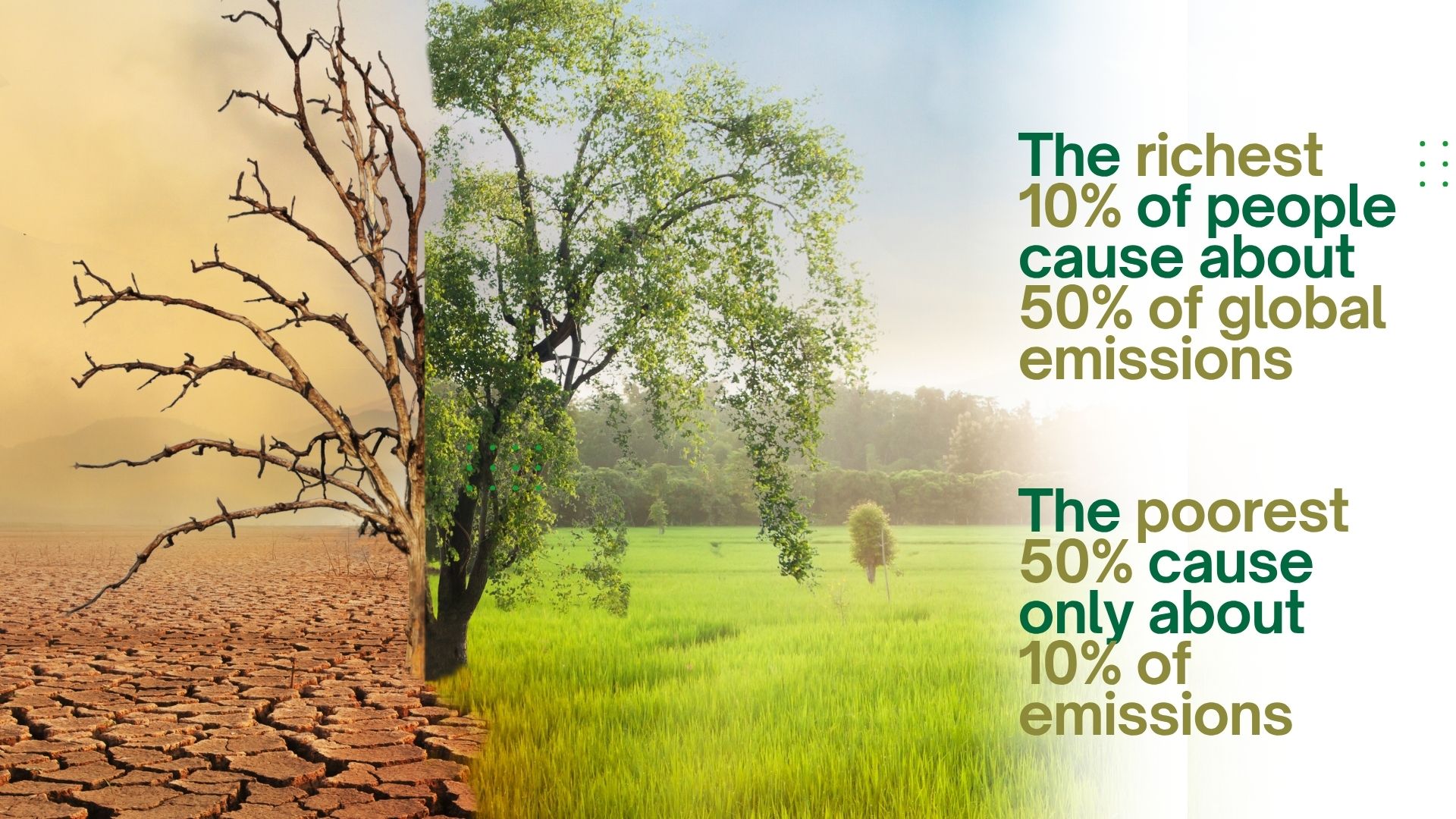
The richest 10% of the world’s population are responsible for nearly half of global emissions, while the poorest 50% contribute only a fraction.
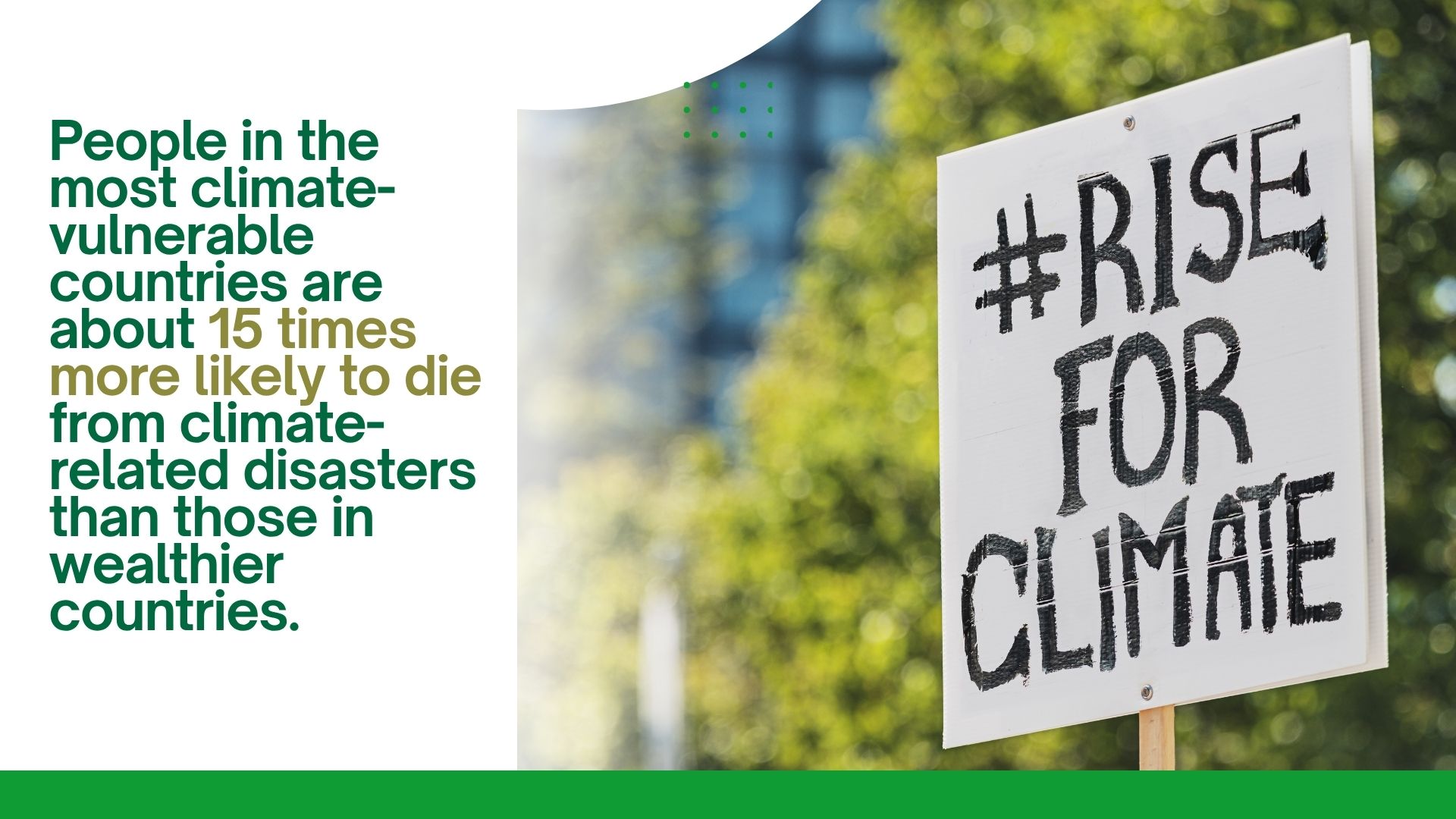
At the same time, low-income countries face the highest exposure to climate risks, with far fewer resources to respond or recover.
This is the imbalance at the heart of climate change.
This Is Where Fairness Comes In
Not everyone has contributed equally to climate change. Some countries, industries, and communities have used far more fuel, energy, and resources over time. Others have used very little.
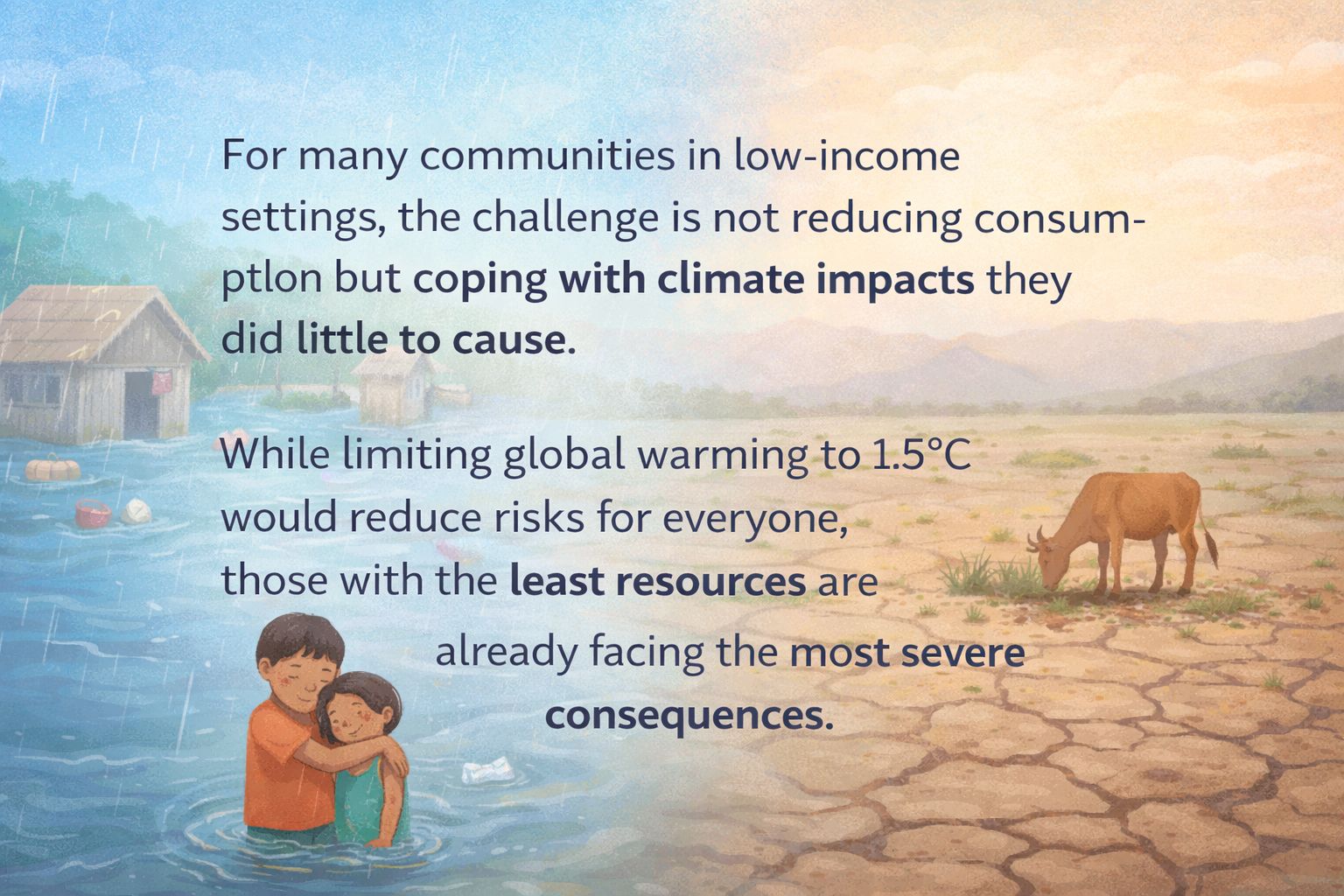
But when climate impacts show up, floods, droughts, heatwaves, crop failures, the people facing the hardest consequences are often those who contributed the least.
That is not just unfortunate. It is unfair. And that is exactly why climate change is a climate justice issue.
You do not have to look far to see this.
A child growing up in the UK might learn about climate change through school lessons, documentaries, and projects. Their home likely has stable access to water, electricity, and healthcare. For them, climate change can feel like a future problem. Something to prepare for.
Now think about a child in rural India.
Climate change may already shape their daily life. Water might not always be available. Heat can affect how long they can stay outside. Farming patterns may have changed, affecting what their family eats or earns.
Both children are part of the same world. But they are not standing on equal ground. One is learning about climate change. The other may already be living through it.
This gap is not random. It is built on differences in resources, access, and opportunity. That is what makes climate change a justice issue.
Children Understand This Better Than We Think
We often assume climate justice is too complex for young children. It is not. Children understand fairness instinctively. They know when something is not right. When someone has too much and someone else has too little. When one person’s actions affect another unfairly.
Climate change can be explained through that same understanding. If some people cause more harm, but others face the consequences, children can recognise the imbalance.
The language does not need to be complicated. The idea is simple.
So How Do We Talk About It?
The problem is not that climate change is too hard to explain. The problem is that we often explain it in ways that feel distant and abstract.
For younger children, especially between ages 3 and 11, the conversation needs to stay close to their world.
It can begin with everyday things: Water. Food. Heat. Trees. Homes.
It can begin with questions:
Is it fair if some people have clean water and others do not?
Is it fair if some places are safe while others face floods?
Is it fair if some people waste resources while others struggle?
These questions do more than explain climate change. They build a sense of awareness.
What This Means for Climate Education
If climate change is unequal, then the way we teach it cannot be the same everywhere.
A one-size-fits-all approach risks reinforcing the very inequalities we are trying to address.
At Earth Warriors Global, this is central to how we work.
We design climate education that is contextual, recognising that children experience climate change differently depending on where they live and the resources they have.
Our curriculum is implemented across both high-resource and low-resource settings, with adaptations that reflect local realities.
Because climate education should not create further gaps. It should close them.