
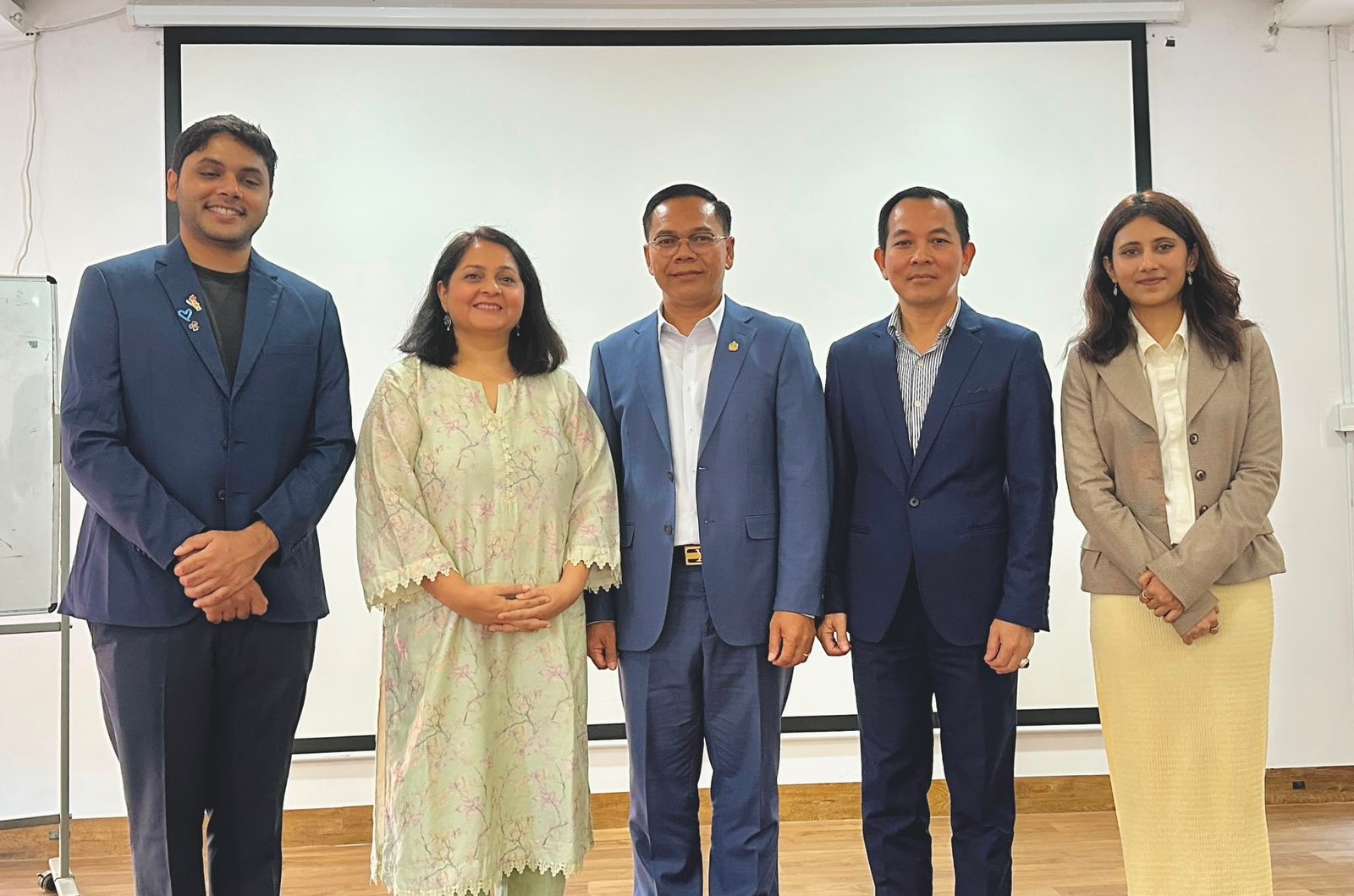
There are some workshops where you leave with a folder full of notes. And then there are workshops where you leave carrying stories, questions, laughter, and a renewed sense of why the work matters. Our recent two-day workshop in Cambodia was one of the latter. We had the opportunity to contribute to a climate education training organised for the Ministry of Education, Youth and Sports of Cambodia, in collaboration with ARNEC (Asia Regional Network for Early Childhood). The sessions were co-delivered by Dr Neelima Chopra and Dr SriHari Govind from ARNEC, alongside Riya Singh from Earth Warriors.
The workshop brought together Early Childhood Education (ECE) officers to explore a question that feels increasingly urgent: How do we help young children understand a changing climate without making them afraid of the world they are growing up in? Because climate change is no longer something children will encounter someday. They are already living through hotter days, changing rainfall, floods, droughts and disruptions to the ecosystems around them. And if that is the reality, climate education cannot only be about communicating the scale of the crisis. It also has to be about helping children understand that they belong to the world around them and that they have a role in caring for it.
- Starting with Hope
We began with the importance of hope-based teaching in early climate education.
Why hope? Because hope transforms climate learning from fear-based messaging into solution-oriented action. It allows children to encounter difficult realities without being overwhelmed by them. It helps them develop resilience, responsibility and, perhaps most importantly, a sense of agency. For us, this was not about presenting an overly positive picture of climate change or pretending that the challenges are small. Hope does not mean hiding the crisis from children. It means giving them the emotional and practical tools to face it. That message seemed to stay with the ECE officers.
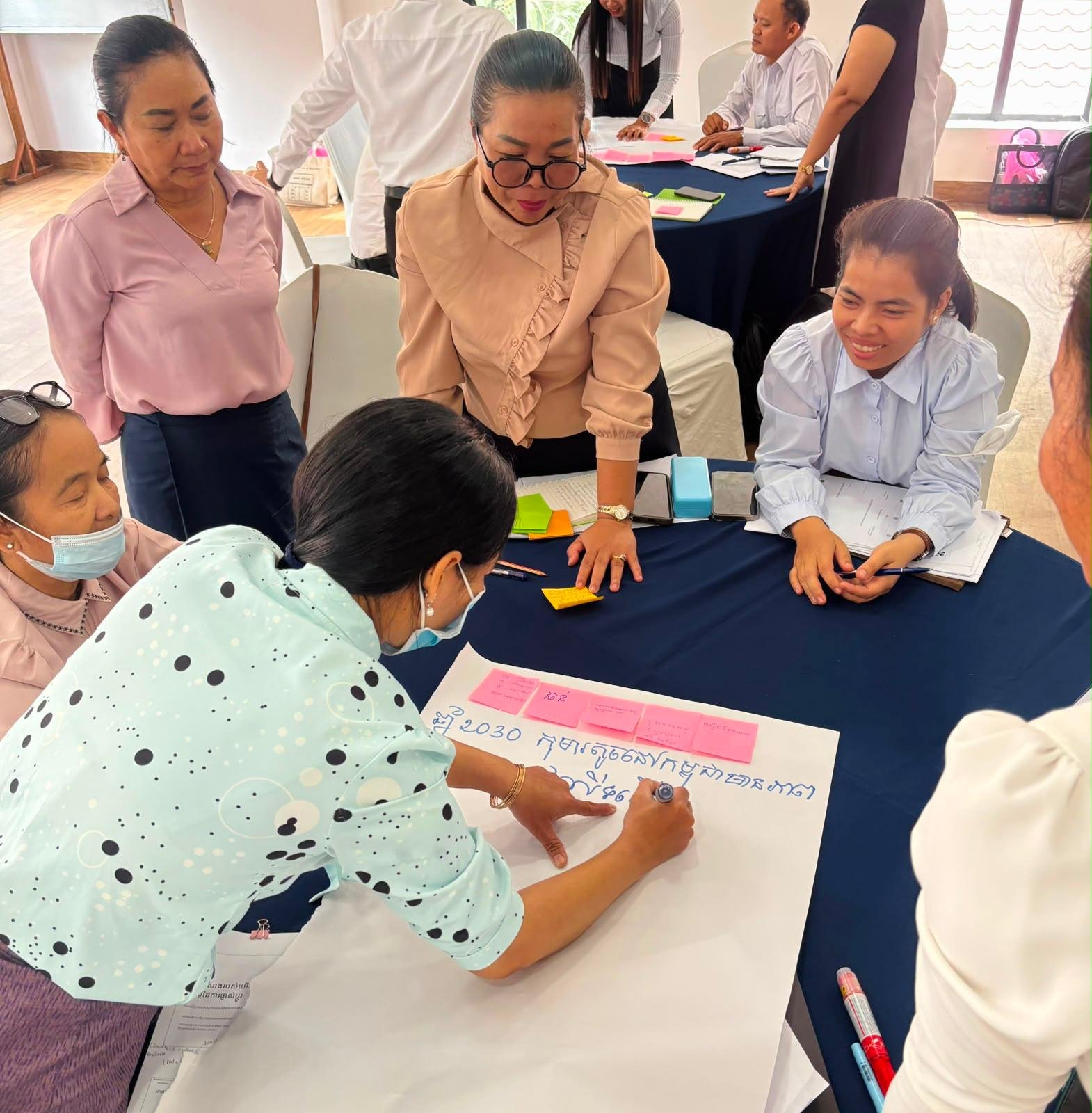
As we moved into an activity where participants developed their own “hopeful classroom toolkit,” they began identifying simple ways they could create spaces where children feel safe, connected and hopeful while learning about their environment. The ideas that emerged were beautifully grounded in everyday life.
Some spoke about teaching children different ways of protecting themselves from climate-related risks. Others focused on helping children understand how to live with nature, think critically about the natural world, care for trees and plants, and learn what it means to coexist with other species. There were ideas around saving water and introducing children to different methods of rainwater harvesting. Others centred on helping children understand why natural resources need to be protected. None of these ideas required complicated technology or expensive classroom resources. They started with something much simpler: helping children build a relationship with the world around them. And perhaps that is where much of climate education needs to begin.
One of the most memorable moments came towards the end of the first day. The ECE officers shared a local story that is taught to children about a frog learning to swim. What followed was not a discussion or a presentation. It was dancing. One person began, others followed, and soon the room was filled with everyone moving together.
It was a small moment, but it captured something important about early childhood education: children learn through stories, movement, imitation, play, relationships and joy.
Climate education does not have to be another lesson that children simply sit and listen to. It can be a story. It can be a song. It can be planting a seed. It can be learning where water comes from. It can be dancing together. It can be learning how to care for another living being. These experiences can quietly build the foundations of environmental responsibility long before a child knows the words “climate change.”
- From understanding the crisis to building resilience
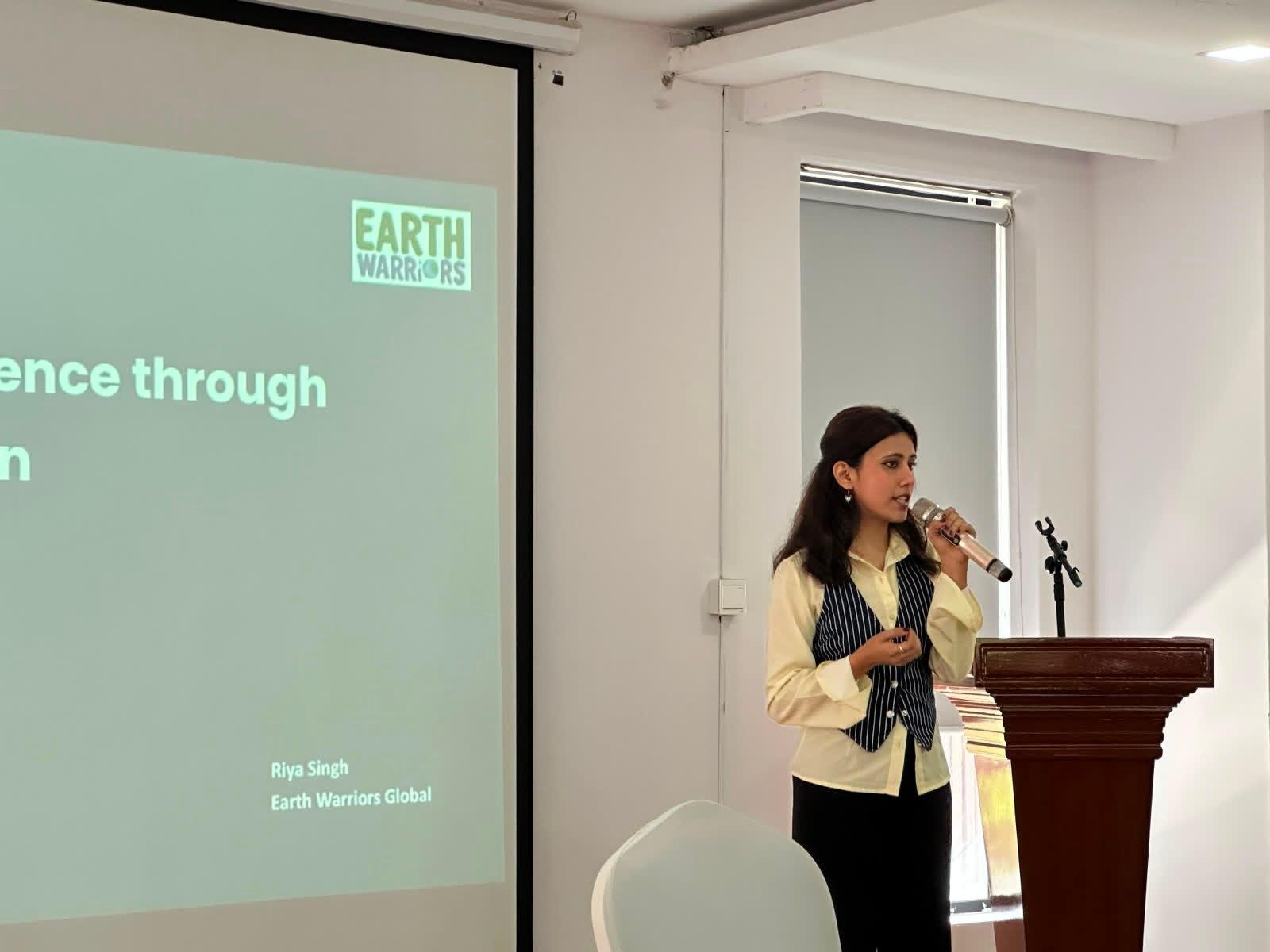
On the second day, Earth Warriors led a session exploring how we can build climate resilience through early climate education—from understanding why it matters to thinking about how it can actually be taught. This was particularly important because one of the strongest expectations from the ECE officers was practical: What can we actually do in our classrooms? How do we talk about climate change with very young children in ways that are meaningful, age-appropriate and hopeful?
We began by understanding the ECE context in Cambodia before looking at the country’s changing climate realities. And it was important that this conversation was not only led by us. We learnt from the participants themselves. They spoke about the climate impacts they were witnessing and experiencing, including extreme heat and riverine flooding. These changes are not isolated environmental events. They have consequences for water security, fisheries, livelihoods, displacement and drought. This made the role of education even more significant.
Around 30% of Cambodia’s population is under the age of 14, making early and youth education an important space for building the knowledge, relationships and capacities that communities will need as climate risks continue to evolve. But resilience cannot simply mean teaching children how to survive disasters. It also means helping them understand the systems around them.
Where does our water come from? Why are trees important? What happens when rivers flood? How can we take care of the places we live? How do we share our environment with other species? And perhaps most importantly: What can I do? These are questions that can begin in early childhood.
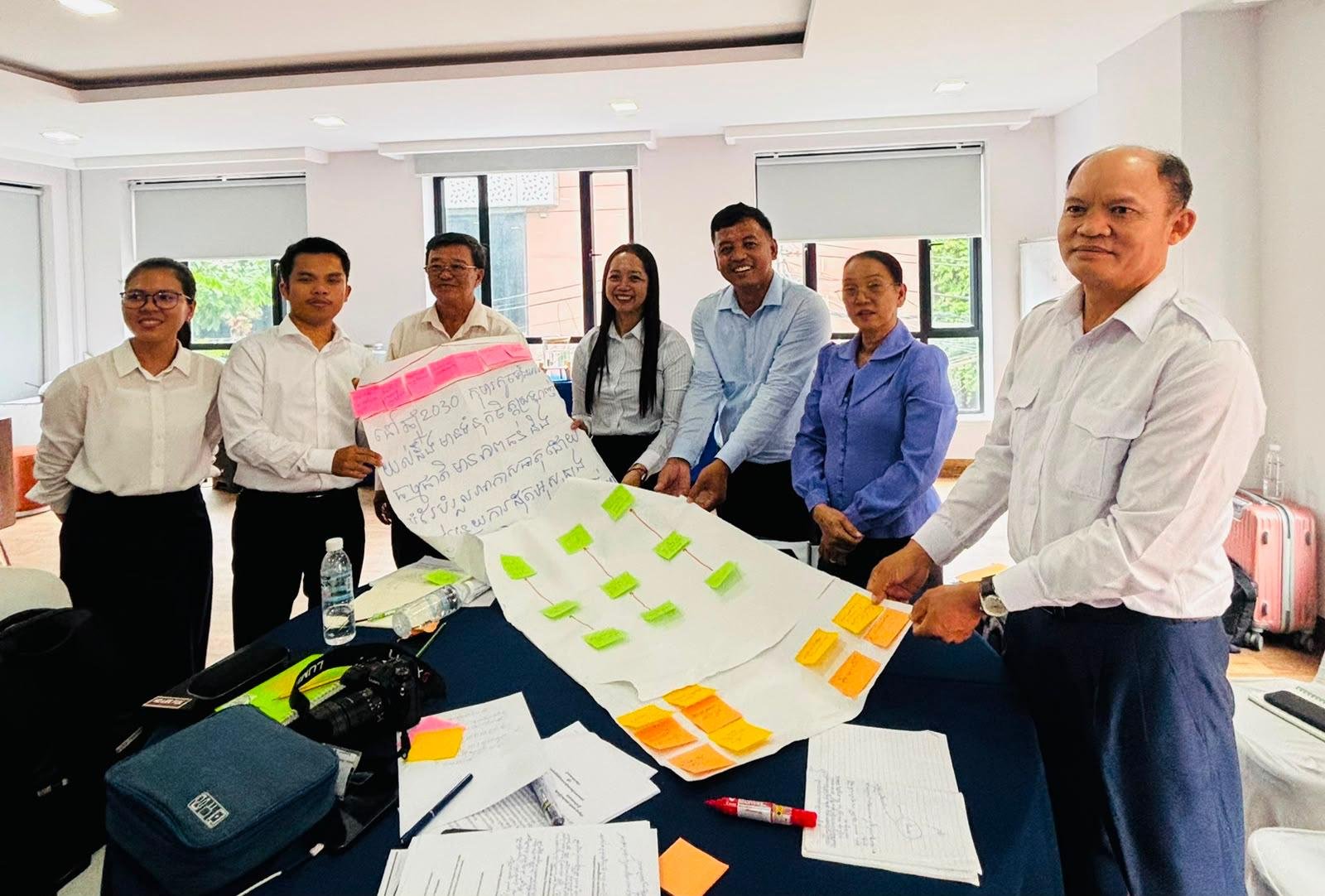
Towards the end of the workshop, the ECE officers were invited to look beyond the two days and imagine what climate-responsive early education could look like over the next decade. They developed their own roadmaps, identifying actions they could take to integrate climate knowledge and resilience into existing programmes. There was something deeply encouraging about watching participants move from learning to imagining and then to committing. A workshop can give people information. But the real value lies in what happens when that information becomes an idea, an idea becomes a plan, and a plan begins to become practical.
- Why this matters
Climate education is often discussed in terms of curriculum, learning outcomes and educational resources. All of these are important. But workshops like this remind us that education is also about people. It is about creating spaces where educators can ask questions, share what they already know, learn from one another and imagine what is possible within their own communities. And it is about recognising that climate education does not have to begin with a child understanding the science of carbon emissions.
It can begin with a child learning to love a tree. With understanding why water matters. With caring for a frog. With learning that humans are not separate from nature, but part of it. Perhaps this is what hope-based climate education ultimately asks of us: not to protect children from the reality of climate change, but to equip them to meet that reality with knowledge, care, connection and agency.
We left Cambodia with many reflections, but one stayed with us most strongly: If we want to build a more climate-resilient future, we have to start much earlier than we think. And we have to start by giving children not only the knowledge to understand the world, but the hope to believe they can be part of shaping it.