
Climate change is often described as the defining challenge of our time. Rising temperatures, extreme weather events, air pollution, water scarcity, and environmental degradation are reshaping lives and communities across the world. Yet while climate change affects everyone, it does not affect everyone equally.
Among those facing some of the greatest risks are persons with disabilities.
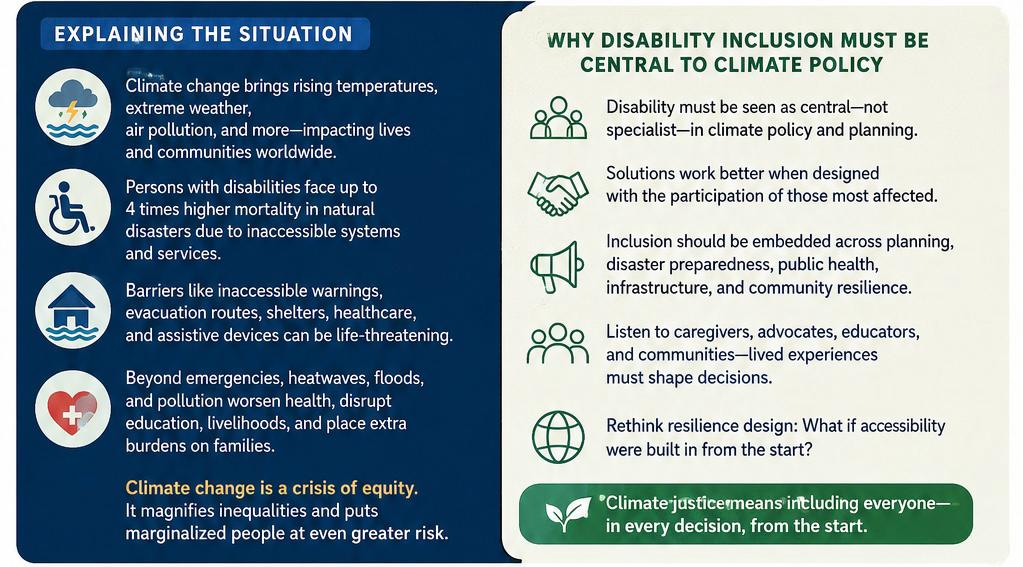
A growing body of research highlights the disproportionate impacts of climate change on people with disabilities. A recent review by the Cambridge Network for Disability and Education Research found that the mortality rate of persons with disabilities during natural disasters can be up to four times higher than that of people without disabilities.[1] The reasons are not difficult to understand.
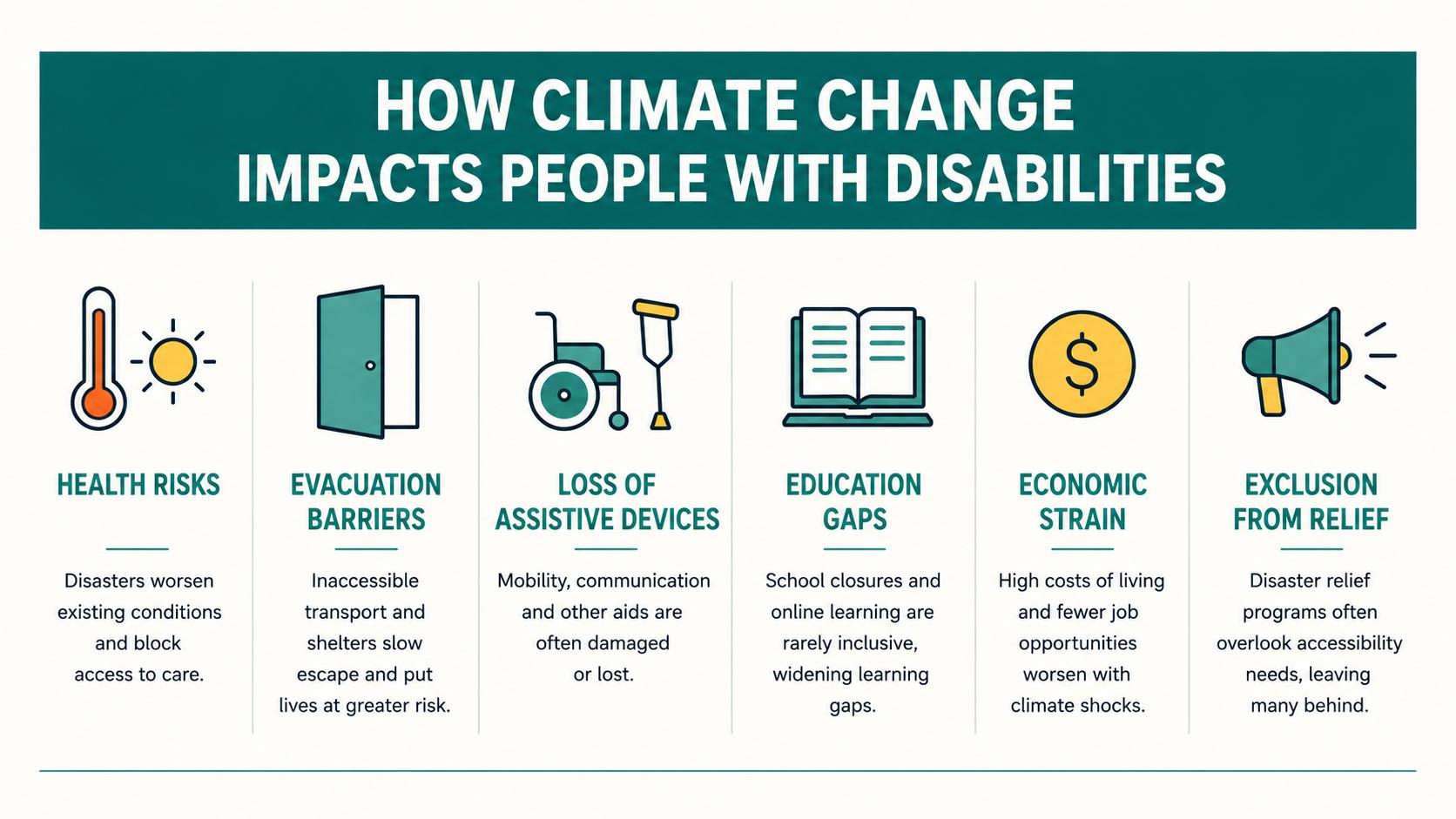
Climate emergencies often expose and amplify barriers that already exist. Early warning systems may be inaccessible. Evacuation routes may not accommodate mobility needs. Shelters may lack accessible infrastructure. Access to healthcare, medication, rehabilitation services, and assistive devices can be disrupted precisely when they are needed most.
The impacts extend beyond immediate emergencies. Heatwaves can worsen existing health conditions. Floods increase exposure to water-borne diseases. Air pollution can aggravate respiratory illnesses. Families caring for children with disabilities often face additional challenges as climate shocks disrupt education, healthcare, livelihoods, and support systems.
Climate change, therefore, is not simply an environmental crisis. It is also a crisis of equity. It magnifies existing inequalities and places those already at the margins at even greater risk.
Why Disability Inclusion Must Be Central to Climate Policy
Despite growing recognition of climate vulnerability, persons with disabilities remain largely absent from climate adaptation and resilience planning.
Too often, disability is treated as a specialist issue rather than a central consideration in climate policy. Yet research consistently shows that climate solutions are more effective when they are designed with the participation of those most affected.
Scholars and practitioners increasingly argue that disability inclusion should be embedded across climate planning, disaster preparedness, public health, infrastructure, and community resilience strategies. This means moving beyond viewing persons with disabilities solely as beneficiaries of support and recognising them as active contributors to climate solutions.
It also requires listening to caregivers, disability advocates, educators, and community organisations who understand the realities faced by families every day. Inclusive policymaking depends on lived experience.
The challenge is not simply to make existing systems more accessible. It is to rethink how climate resilience is designed in the first place.
What would climate adaptation look like if accessibility were built in from the start? What would disaster preparedness look like if children with disabilities and their families helped shape the response? What would change if climate justice genuinely included everyone?
The Role of Climate Education
Education has a critical role to play in building climate resilience, yet the intersection of climate change, disability, and education remains surprisingly underexplored.
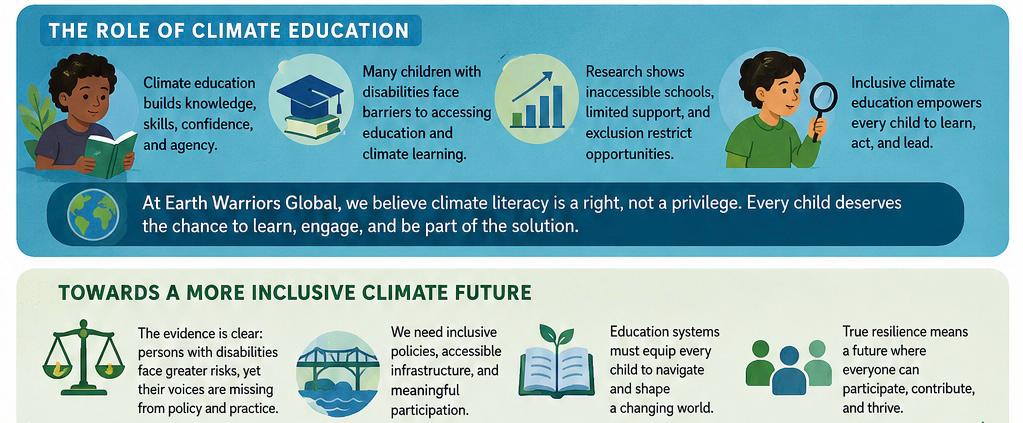
Climate education helps children understand environmental challenges, develop problem-solving skills, and participate in creating solutions. It builds awareness, confidence, and agency. However, many children with disabilities continue to face barriers to accessing both education and climate-related learning opportunities.
Research from countries such as Bangladesh and Zimbabwe has highlighted how inaccessible learning environments, limited support services, and a lack of inclusive teaching practices can restrict access to climate knowledge and resilience-building opportunities.
This matters because children with disabilities are not only affected by climate change. They also have valuable perspectives, experiences, and ideas to contribute.
Inclusive climate education ensures that all children have the opportunity to understand the changing world around them, participate in environmental action, and see themselves as part of the solution. It moves the conversation from vulnerability to empowerment.
At Earth Warriors Global, this belief sits at the heart of our work. Climate literacy should not be a privilege available to some children and not others. Every child deserves the opportunity to learn, engage, and lead.
Towards a More Inclusive Climate Future
The climate crisis is forcing societies to rethink how we prepare for the future. As we build resilience, adapt to changing conditions, and develop new solutions, inclusion cannot remain an afterthought.
The evidence is clear: persons with disabilities face disproportionate climate risks, yet their voices remain underrepresented in climate discourse, policy, and practice. Addressing this gap is not simply a matter of accessibility. It is a matter of climate justice.
Building a climate-resilient future requires inclusive policies, accessible infrastructure, meaningful participation, and education systems that equip every child to navigate a changing world.
Because the true measure of resilience is not how well we protect the most visible among us. It is whether we create a future in which everyone has the opportunity to participate, contribute, and thrive.