
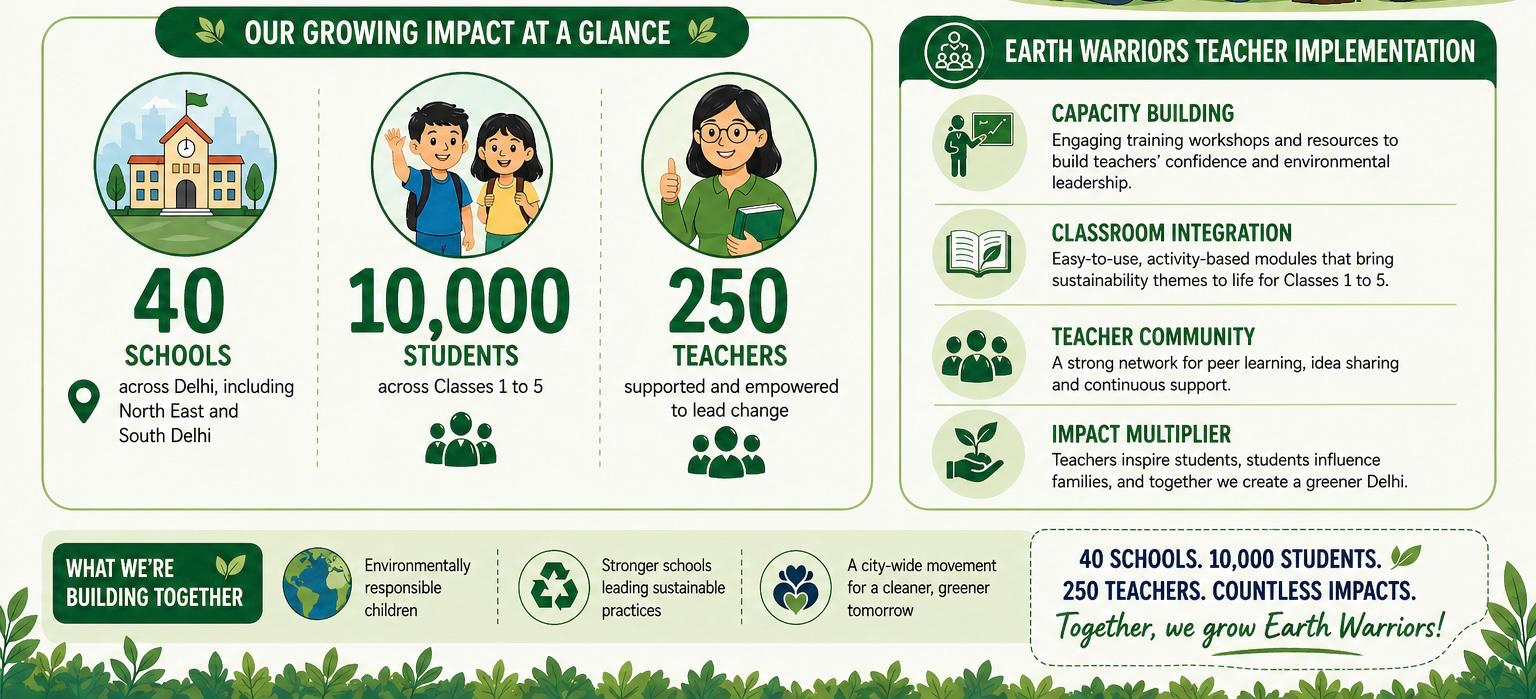
In 2025, we worked with 10 government schools in Delhi to bring climate learning into everyday classrooms. From the start, we chose to work with government schools because this is where scale becomes real. This is where most children learn, across different backgrounds and realities, and where any meaningful shift in climate awareness can have the widest reach. If climate education is meant to prepare children for the world they are growing into, it cannot stay limited to a few well-resourced classrooms. It has to work in the system as it exists, within everyday constraints. The Earth Warriors programme implementation includes a teacher training on climate change; implementation of 15 lessons in the classroom by trained teachers with support from the Earth Warriors team. As we expand to 40 schools across Delhi, including North East and South Delhi, the programme will reach around 10,000 students across Classes 1 to 5, supported by approximately 250–300 teachers. We are also doing this differently. The goal is not just to reach more schools, but to make sure the programme fits into how classrooms already run.
The findings draw not only from focus group discussions, but from a broader impact evaluation that included key informant interviews with teachers across participating schools. The full impact report will be published in June 2026.
Across both FGDs and interviews, the Earth Warriors curriculum showed clear shifts in how students think, speak, and act on environmental issues. Teachers consistently reported that students moved beyond passive understanding to active behaviour change, both in school and at home.
In classrooms, students began using environmental vocabulary with confidence and linking concepts to their own surroundings. As one teacher shared, “Students don’t just repeat terms like pollution or climate change, they explain them in their own words and connect them to what they see around them.” This reflects not just recall, but comprehension and application.
Behavioural changes, while small, were consistent and visible. Teachers noted students switching to reusable bottles, reducing food waste, and reminding peers not to litter. One teacher described this shift clearly: “Now they stop each other from wasting water or throwing garbage. They take responsibility on their own.”
Finally, teachers highlighted a shift in how students interpret real-world events. Children began connecting lessons to lived experiences such as local pollution, water shortages, and extreme weather. As one teacher explained, “When they see floods or garbage around, they now relate it to what we discussed in class.”
Making It Fit the System, Not Sit Outside It
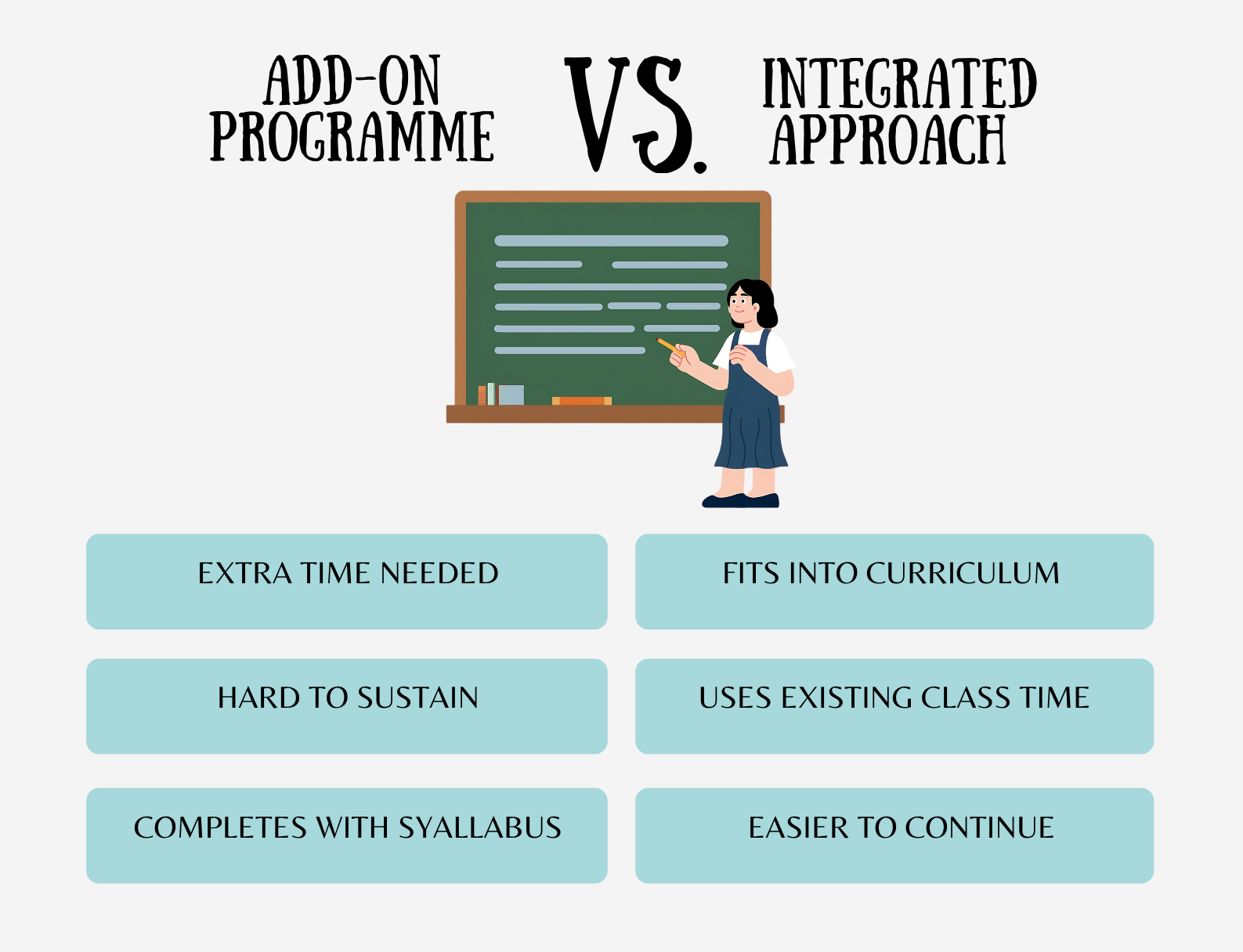
This is the biggest shift in this phase. The Earth Warriors curriculum is not an add on – it is being built into the existing Rashtraneeti Curriculum, especially within EVS and language classes.
Climate learning becomes part of what students are already studying, instead of a separate activity. This makes it easier to continue and more consistent over time. If something sits outside the system, it rarely lasts.
Supporting Teachers
Teacher support is being strengthened based on what we heard in the pilot. Training begins earlier in the academic year, sessions are more interactive, and spread out over time instead of being done in one go.
Lesson plans are being simplified, with clearer materials and short assessments that fit into regular teaching time.
Keeping It Practical
Students engage more when they are actively involved. Planting, observing, creating, and discussing made a clear difference in the pilot.
The programme will continue to build on this with more visual content, stories, and simple activities that use easily available materials. The aim is to keep learning easy to understand and easy to teach.
Why This Matters
Working with government schools allows us to reach more children, especially those already experiencing the effects of climate change in their daily lives. It also helps ensure that climate education becomes part of the system, not a one-time programme.
What Comes Next
Moving from 10 to 40 schools is a step forward, but it also means getting the basics right. The curriculum works, and teachers are willing. The focus now is on making it sustainable.
Making sure it fits into real classrooms, supports teachers, and continues over time. Because this is not about adding another subject. It is about helping children understand the world they are growing up in, and how they can respond to it.