
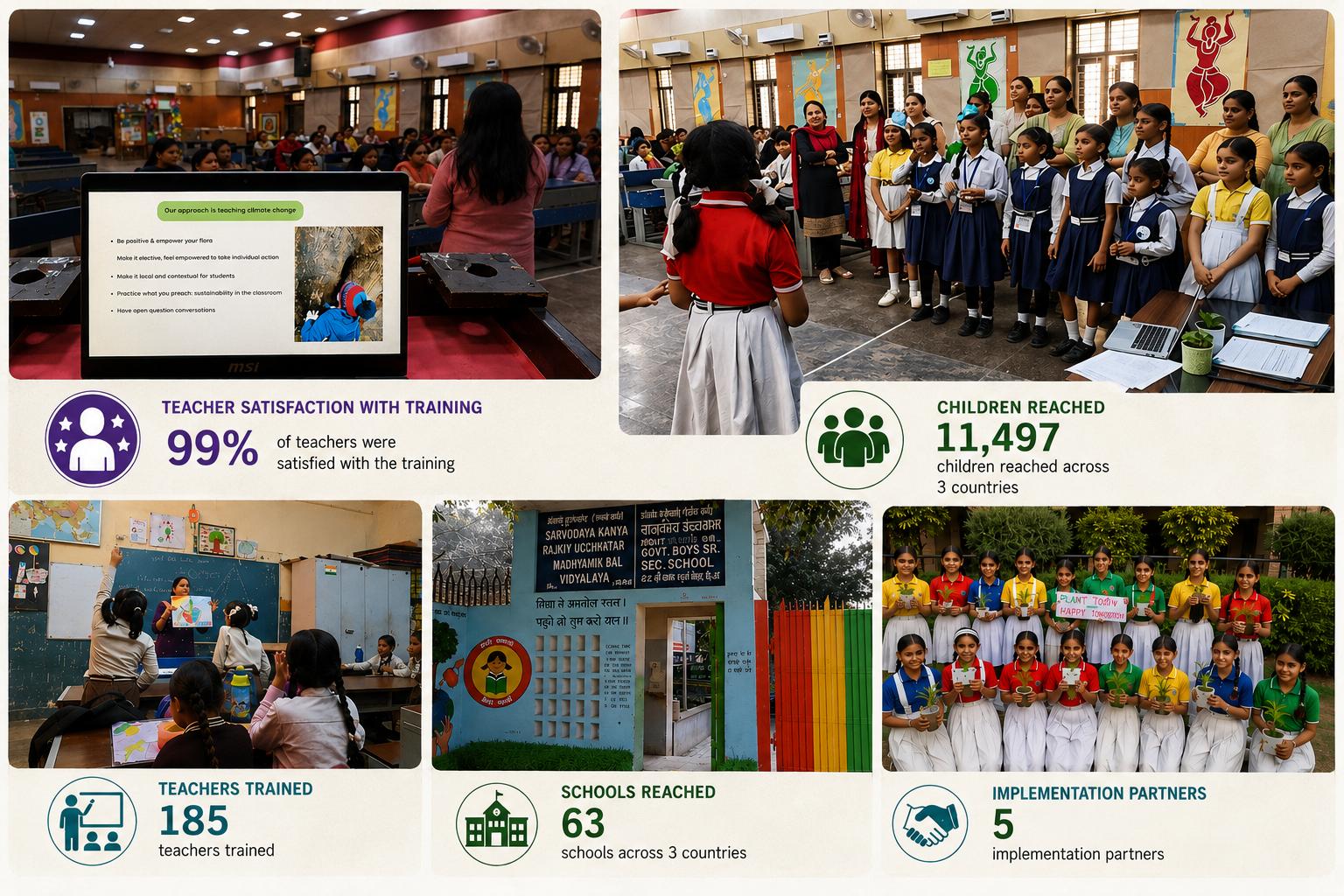
Over the past year, Earth Warriors Global had the opportunity to implement Climate Heroes in the Making across 63 government and low-fee community schools in India, Kenya, and Tanzania. Together with our partners, we reached nearly 11,500 children aged 3 to 11 and trained 185 teachers to bring climate education into their classrooms.
As we analysed the findings from our Global Endline Report, one message stood out above all else: climate education is about much more than teaching children facts about climate change. When learning is rooted in children’s everyday experiences, it helps them build curiosity, confidence, and a sense of responsibility that extends far beyond the classroom.
Here are some of the biggest lessons we took away from the programme.
Climate education is most meaningful when children can connect it to their own lives
Climate change can often feel like a distant, abstract concept, especially for young learners. We found that children engaged much more deeply when lessons started with the world they already knew.
Instead of introducing climate science through definitions and diagrams, children explored biodiversity around their schools, observed changing weather patterns, reflected on waste and water use at home, and discussed environmental challenges within their own communities. Through storytelling, nature walks, games, classroom discussions, and hands-on activities, climate change became something they could see, understand, and relate to.
Teachers consistently told us that these practical experiences generated the highest levels of participation and curiosity. Children weren’t simply memorising information. They were asking questions, making connections, and beginning to see themselves as active participants in protecting their environment.
Young children are ready for climate education
One of the most encouraging findings from the programme was just how capable young children are of engaging with environmental concepts.
Children as young as three developed a stronger understanding of nature, living things, and environmentally responsible behaviours through age-appropriate activities. For older primary students, learning went further, helping them understand climate change, biodiversity, pollution, and practical environmental solutions.
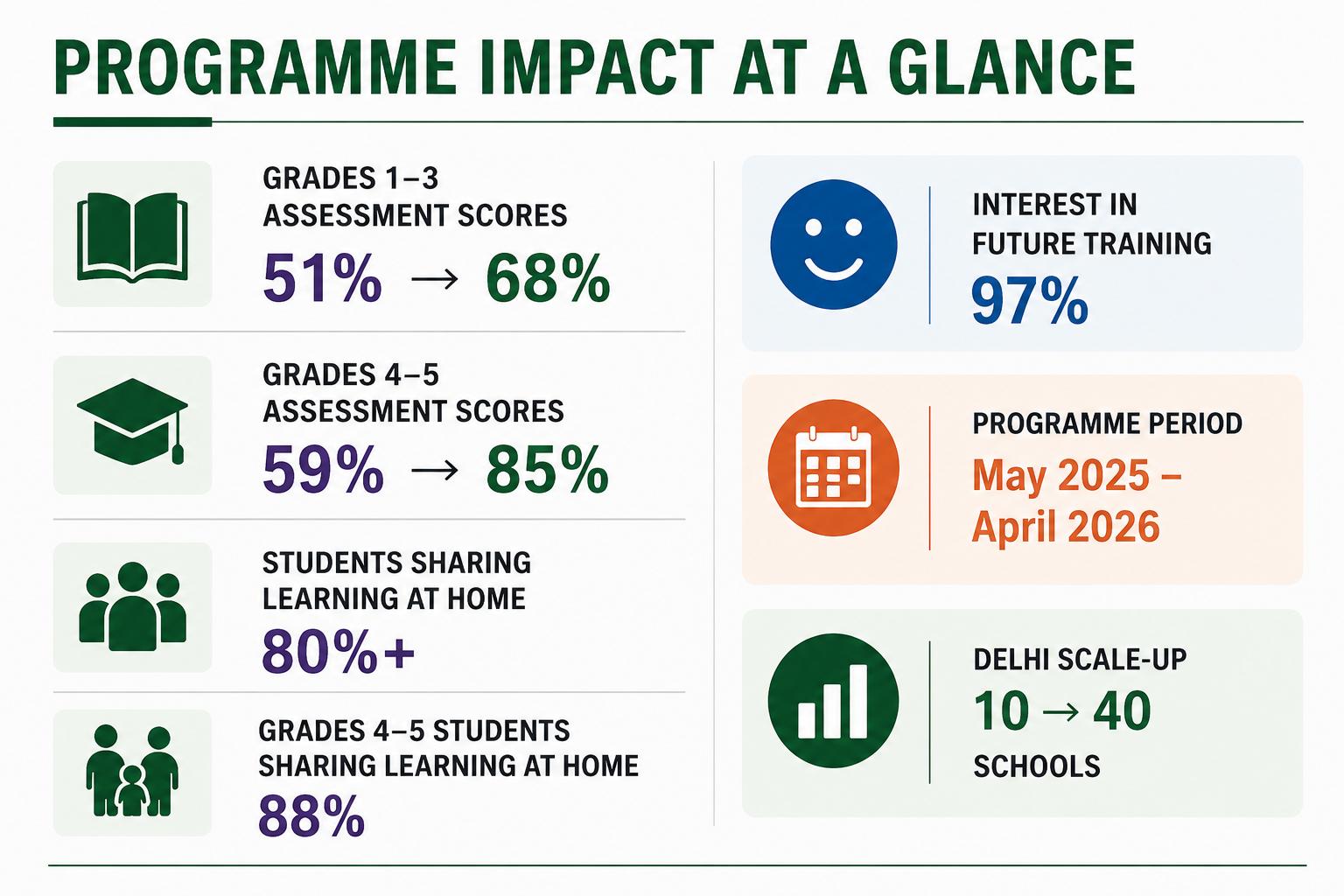
Across the programme, assessment scores improved significantly. Students in Grades 1 to 3 increased their average scores from 51 percent to 68 percent, while students in Grades 4 and 5 improved from 59 percent to 85 percent.
These findings reinforce something we have long believed: children do not need climate education to be simplified beyond recognition. They need learning experiences that match their stage of development while encouraging curiosity, exploration, and action.
Learning didn’t stop at the classroom door
Perhaps the most meaningful outcome of the programme was seeing how climate learning travelled beyond school.
More than 80 percent of students shared what they had learned with their families, increasing to 88 percent among students in Grades 4 and 5. Teachers and parents described children reminding family members to switch off taps, reduce plastic use, segregate waste, carry reusable bottles, conserve electricity, and care for local biodiversity.
One story that particularly stayed with us came from a Grade 3 student who refused to continue throwing household waste into a nearby river after learning about pollution in school, even when encouraged to do so by his grandmother. It was a small moment, but one that reflected something much bigger. Children were beginning to question harmful practices and influence those around them.
These stories reminded us that children are not passive recipients of climate education. They become advocates within their homes, inspiring conversations and encouraging more sustainable habits among family members and communities.
Teachers are at the heart of meaningful climate education
A strong curriculum is important, but teachers are what bring climate education to life.
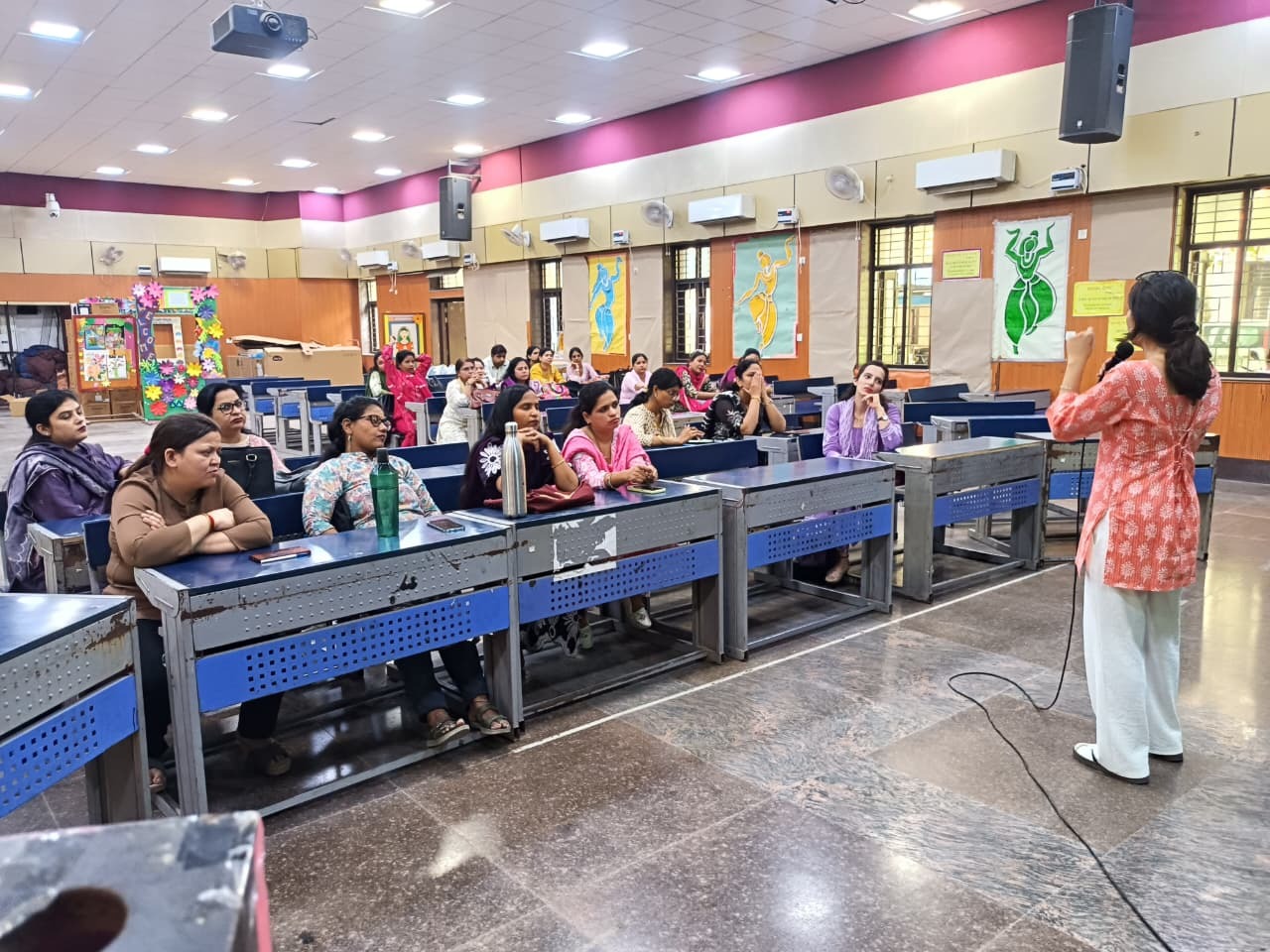
Throughout the programme, we trained 185 teachers across India, Kenya, and Tanzania on climate change, biodiversity, sustainability, pollution, environmental stewardship, and child-centred teaching approaches.
Across all three countries, teachers reported greater confidence in teaching climate topics after the training. Many shared that they were facilitating more outdoor activities, encouraging classroom discussions, and integrating climate concepts into their everyday teaching with greater confidence.
Although implementation challenges varied across countries, the message was remarkably consistent. Teachers were eager to teach climate education but needed time, resources, practical materials, and ongoing support to do so effectively. Investing in teachers proved to be just as important as investing in curriculum.
Looking ahead
The findings from Climate Heroes in the Making reaffirm why Earth Warriors Global exists.
Climate education should not be confined to a chapter in a textbook or an annual awareness campaign. It should become part of children’s everyday learning, helping them understand the changing world around them while building the knowledge, skills, and confidence to respond.
As we continue expanding our programmes across schools and communities, these lessons will guide our work. We will continue designing learning experiences that are practical, joyful, and locally relevant. We will continue supporting teachers with the tools and confidence they need. And most importantly, we will continue investing in children, because they are not only the leaders of tomorrow. They are already influencing the decisions, conversations, and behaviours of today.
Our Endline Report confirmed what we see every day in classrooms: when children are trusted with meaningful climate education, they rise to the challenge. They don’t just learn about climate change. They become climate heroes in the making.